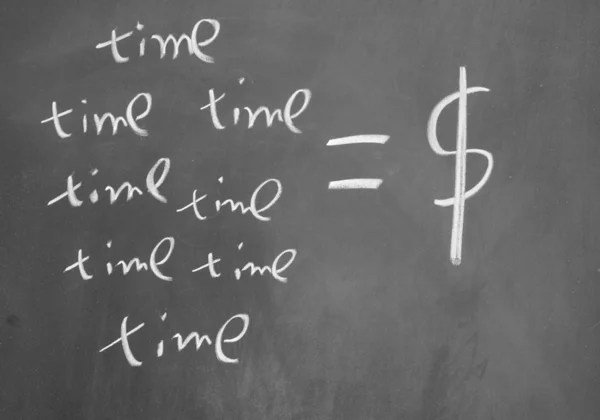
Convenience Factor: Time vs. Money’s Hidden Price Tag
We all chase it: that feeling of getting more done, having more free time, or simply making life a little easier. Often, we reach for convenience, paying a bit extra to shave off precious minutes. But what's the true cost of this choice? The Convenience Factor: Time vs. Money isn't just about the immediate price tag; it's about an invisible ledger, silently balancing our bank accounts against our most finite resource: time. Understanding this dynamic is crucial for making decisions that truly align with our financial well-being and life goals.
At a Glance: Key Takeaways
- Convenience often carries a significant, often hidden, financial cost that accumulates over time.
- Small, habitual convenience purchases (like daily coffee or lunch out) can lead to thousands of dollars in missed savings and investment growth over years.
- Delivery services, while convenient, frequently inflate prices and add multiple layers of fees.
- Research suggests consumers value their time, but their willingness to pay for it varies based on context and individual priorities, with an average value around $13.21 per hour in specific scenarios.
- Smart decision-making isn't about eliminating all convenience, but about consciously calculating the true trade-off between the money spent and the actual value of the time saved.
The Invisible Ledger: Why We Keep Trading Time for Money (and Vice Versa)
It’s a universal dilemma: you’re rushing out the door, late for work, and you grab a drive-thru coffee. Or perhaps a long day leaves you too tired to cook, so you opt for takeout. These moments, seemingly small and justifiable, represent the core tension of the convenience factor. We inherently understand that time is valuable, sometimes even equating it directly to money. Yet, our actions often suggest otherwise, prioritizing instant gratification or perceived efficiency over long-term financial prudence.
This isn't just about laziness; it's deeply ingrained in human psychology. We're wired for efficiency, and our brains often favor immediate rewards over delayed ones. A few extra dollars now to avoid 20 minutes of food prep seems like a good deal in the moment. The problem arises when these isolated "good deals" accumulate, becoming a substantial drain on our finances without us ever realizing the true opportunity cost.
The goal isn't to live a life devoid of all conveniences, sacrificing every comfort for the sake of savings. Instead, it’s about becoming a conscious consumer of both time and money, understanding when a convenience genuinely adds value to your life, and when it's simply a costly habit.
Unmasking the Hidden Costs of Convenience
The real cost of convenience extends far beyond the extra dollar you pay for pre-cut fruit. It's the compound effect, the lost investment opportunities, and the erosion of your financial freedom. Let's peel back the layers on some of the most common convenience traps.
The Daily Drain: When Small Buys Add Up
Think about your daily routines. Where do you routinely choose speed or ease over a slightly more involved (and cheaper) alternative? These seemingly minor choices are often the biggest culprits in eroding your savings.
- The Drive-Thru Coffee Habit: It’s just a dollar or two more, right? Not really. Brewing coffee at home might take five minutes, but it can save you upwards of $1 per 16-ounce cup, sometimes even $2.50 daily for a value brand. Over the course of a year, that's potentially $365 to $912. Expand that to a decade, and you're looking at $4,000 in savings. Invest that money wisely, and you could see an additional $1,000 in returns within the first ten years, growing by $200 annually thereafter. That quick caffeine fix suddenly looks like a missed down payment on a car, or a significant contribution to your retirement fund.
- Lunch Out vs. Brown-Bagging: The office lunch run is a common ritual. An average lunch purchased out can set you back around $15.00. Contrast that with a homemade meal, which could cost as little as $4.50, especially if you're utilizing leftovers or quick-to-prepare ingredients like canned beans or pasta. That’s a daily saving of $10.50. Per week, that's $52.50. Multiply that by four weeks, and you’re saving $210 a month. Over a year, this simple shift could put nearly $2,520 back into your pocket. Imagine what you could do with an extra two grand and change!
The Digital Premium: Delivery Services
The allure of food or grocery delivery is undeniable: a few taps, and sustenance appears at your door. Yet, this seamless experience comes with a hefty price.
- Beyond the Nominal Fee: While you see the delivery charge, there are often hidden costs. Platforms frequently impose higher fees for smaller orders to ensure profitability. You might also encounter "service fees" or "transaction premiums" that aren't immediately obvious.
- Price Inflation: Many delivery services mark up the menu prices of items by 20% or more compared to what you’d pay by ordering directly or picking up. This means you're paying a premium on the food itself, on top of all the associated fees and tips.
- Strategic Use: Delivery services offer the best value when used for large orders, such as a month's worth of groceries, where the fees are a smaller percentage of the total bill. For a single meal, however, the convenience often dramatically outweighs the financial sense. If you've ever wondered whether the convenience of getting food brought right to your door truly makes sense for your wallet, you might be interested in delving deeper into questions like, Is Uber Eats truly worth it?
The Pre-Prepped Price Tag: Convenience in the Kitchen
Walk down the produce aisle, and you'll see a growing array of pre-chopped, pre-washed, and pre-packaged vegetables and fruits. While they save you a few minutes, the financial sacrifice is startlingly high.
- Paying for Minutes, Not Dollars: Consider the time it takes to chop a head of lettuce (a few minutes, tops). Buying it pre-chopped can effectively cost you an astonishing $58 per hour of effort saved. Similarly, cutting celery sticks can "save" you $52 per hour, and slicing apples with a simple apple slicer could equate to earning $80 per hour of effort. Unless you're a neurosurgeon on call, it's highly unlikely your personal time is valued at these rates for such simple tasks. This is a classic example of convenience offering very poor financial returns for minimal time savings.
Your Time, Valued: What the Research Says
While these examples highlight the cost of convenience in terms of money, it's equally important to understand the value of time. How much are people actually willing to pay to save a minute, or an hour? Economic research provides fascinating insights.
A study co-authored by MIT economist Tobias Salz, utilizing data from Liftago, a Prague-based ride-sharing platform where drivers bid on passenger requests, shed light on how consumers value time in monetary terms, particularly in transportation. Researchers analyzed millions of ride requests and bids, where passengers could effectively pay more to save on wait times.
Key Findings from the Ride-Share Study:
- Price Sensitivity Over Time Sensitivity: Consumers proved to be significantly more responsive to changes in price than to changes in wait times—between 4 to 10 times more responsive, in fact. This suggests that while time is valued, the direct monetary cost is often a more immediate deterrent for many.
- The Monetary Value of an Hour: The study calculated an overall value of time for ride-share users in this context at approximately $13.21 per hour. This isn't a universal figure for all time, but it offers a tangible benchmark for how much people are willing to pay to avoid waiting in a specific scenario.
- Context Matters: People are more willing to pay to save time during the workday, when time is often directly linked to productivity or deadlines. Bids for sooner-arriving rides increased significantly during peak working hours.
- Disparate Valuations: The top quartile of bidders valued their time an impressive 3.5 times higher than the bottom quartile. This highlights that "time is money" means different things to different people, influenced by income, priorities, and circumstances.
- Business Implications: When consumers pay more to save time, businesses benefit. The study found that bidding for sooner-arriving rides increased the amount paid above the minimum price by 5.2%, creating additional "surplus" value for firms. This research, supported by institutions like the National Bureau of Economic Research and the U.S. Department of Transportation, underscores how information in markets influences consumer behavior and welfare.
This research reminds us that while we might intuitively say time is priceless, in real-world decisions, we often put a very specific—and sometimes surprisingly low—price tag on it. Understanding this allows us to make more intentional choices about where and when we choose to pay for time savings.
The "Convenience Factor" Framework: When to Splurge, When to Save
Making smart choices about convenience isn't about rigid rules; it's about a personalized framework. It involves asking yourself critical questions before you reflexively reach for the easy button.
Step 1: Calculate Your Personal Value of Time
The MIT study offers a benchmark, but your personal value of time might be different. It’s not just your hourly wage, though that’s a good starting point. Consider:
- Your Hourly Wage (or Freelance Rate): If you earn $X per hour, how much is one hour of your discretionary time worth?
- Opportunity Cost: What could you be doing with that time if you weren't spending it on the task you're outsourcing? Could you be earning more money, learning a new skill, or investing in relationships?
- Emotional Cost: How much is stress reduction, peace of mind, or quality time with loved ones worth to you? Sometimes, paying for a service (like house cleaning) isn't just about saving time, but about reclaiming mental energy.
Step 2: Assess the "Real" Cost of Convenience
Don't just look at the upfront price. Dig deeper:
- Hidden Fees & Markups: As seen with delivery services, the advertised price is rarely the final price.
- Quality Difference: Is the convenient option truly comparable in quality to the DIY alternative? (e.g., a home-cooked meal vs. fast food).
- Future Value of Savings: If you save $X by doing it yourself, what could that $X become if invested over time? Use a compound interest calculator to visualize the long-term impact.
Step 3: Analyze the "Time Saved" ROI
You save 15 minutes by getting takeout. What are you doing with those 15 minutes?
- Truly Productive? Are you using it to finish a critical work task, exercise, or engage in a meaningful hobby?
- Pure Rest & Recharge? Is it genuinely contributing to your well-being, allowing you to relax and avoid burnout?
- Mindless Scrolling? Or are you simply swapping one low-value activity (cooking a simple meal) for another (endless social media scrolling)? If the latter, the convenience isn't truly serving you.
Step 4: Identify Your "Convenience Non-Negotiables"
Where is convenience genuinely worth it for you? For some, it might be childcare; for others, a meal delivery service during a particularly demanding work week. These are the areas where the time saved or stress reduced has a profound, positive impact on your life, justifying the financial outlay. Be honest and specific about these.
Common Myths & Misconceptions About Time vs. Money
The conversation around convenience is often clouded by oversimplifications. Let's clear up some common misunderstandings.
- Myth 1: "All convenience is a waste of money."
- Reality: Not at all. Strategic convenience can be a wise investment. If outsourcing a task like house cleaning frees up hours you can dedicate to a high-paying freelance project, or allows you to spend quality time with your family, the ROI can be immense. The key is strategic—not habitual and thoughtless.
- Myth 2: "Time saved is always time gained."
- Reality: Saving time is only beneficial if you use that reclaimed time intentionally. If saving 30 minutes on meal prep means you spend 30 minutes passively watching TV or browsing the internet, the "value" of that saved time is diminished. True value comes from using that time for something that genuinely moves the needle in your life, whether for growth, rest, or connection.
- Myth 3: "Convenience is only for the rich."
- Reality: While the wealthy certainly leverage convenience services, anyone can strategically employ convenience. For someone on a tighter budget, it might mean investing in a slow cooker for cheap, healthy meals, or buying a used apple slicer for a few dollars instead of repeatedly buying pre-sliced fruit. Strategic convenience can free up time that can then be used to earn more money or develop skills.
Strategies for Mastering Your Convenience Factor
Ready to take control of your time and money? Here are actionable strategies to help you navigate the convenience landscape.
- The "Batching" Blueprint: Instead of making one lunch daily, dedicate an hour on Sunday to prep 3-4 lunches for the week. This saves time and money. Similarly, batch errands, consolidate appointments, or tackle similar chores all at once. The initial investment of time pays dividends.
- Strategic Automation (When it Makes Sense):
- Subscriptions: Is there a product you consistently buy at full price? Explore subscriptions for staples (e.g., coffee beans, toiletries) if they offer a discount and prevent impulse buys.
- Recurring Orders: For groceries, consider "Click & Collect" options. You pick your items online, and a store employee gathers them. You save time browsing aisles, resist impulse purchases, and often avoid delivery fees while still getting convenience.
- DIY Smart: You don't need to become a master chef or mechanic, but learning a few basic skills can save significant money. Meal prepping, simple home repairs, or even brewing your own specialty coffee can cut costs dramatically. Start with one skill that targets a recurring convenience expense.
- The "5-Minute Rule": If a task takes less than five minutes, do it now. This simple habit can dramatically reduce the need for future, more costly "conveniences" (e.g., tidying up before bed means less overwhelming clutter that might tempt you to hire a cleaner; washing dishes immediately means no crusted-on food requiring extra scrubbing or expensive dishwasher pods).
- Budgeting for Convenience: Instead of letting convenience costs bleed your budget dry, allocate a specific, conscious amount of money to it. This might be your "takeout fund" or "coffee allowance." When that money is gone, it’s gone, forcing you to make more deliberate choices.
Making Smarter Choices: Your Action Plan
Taking charge of your Convenience Factor isn't about deprivation; it's about empowerment. It’s about being an active participant in your financial life, rather than a passive recipient of whatever convenience is offered.
- Review Your Last Month's Spending: Go through your bank statements and credit card bills. Highlight every instance where you paid for convenience: takeout, delivery fees, pre-packaged foods, quick coffee runs, or services you could have done yourself. Tally up the total. The number might surprise you.
- Pick One Convenience to Rethink: Don't try to overhaul everything at once. Choose one area where you identified significant spending (e.g., daily drive-thru coffee) and commit to changing that habit for a week or a month.
- Implement a DIY Smart Strategy: For your chosen convenience, identify a more cost-effective, time-efficient alternative (e.g., preparing coffee at home, packing lunch). Put a system in place to make it easy to stick to.
- Track Your Progress and Adjust: At the end of your chosen period, compare your spending and your feelings. Did you genuinely save money? How did you use the "saved" time? Was it worth the effort? Use this feedback to refine your approach.
- Focus on What Truly Buys You Peace or Productivity: Remember, not all convenience is bad. Identify the areas where paying for ease genuinely enhances your life, reduces chronic stress, or frees you up for higher-value activities. Prioritize those, and ruthlessly cut back on the rest.
By actively engaging with the Convenience Factor: Time vs. Money, you move from reactive spending to proactive decision-making. You reclaim not just your money, but also your precious time, aligning your daily choices with your long-term goals and a more intentional way of living.